

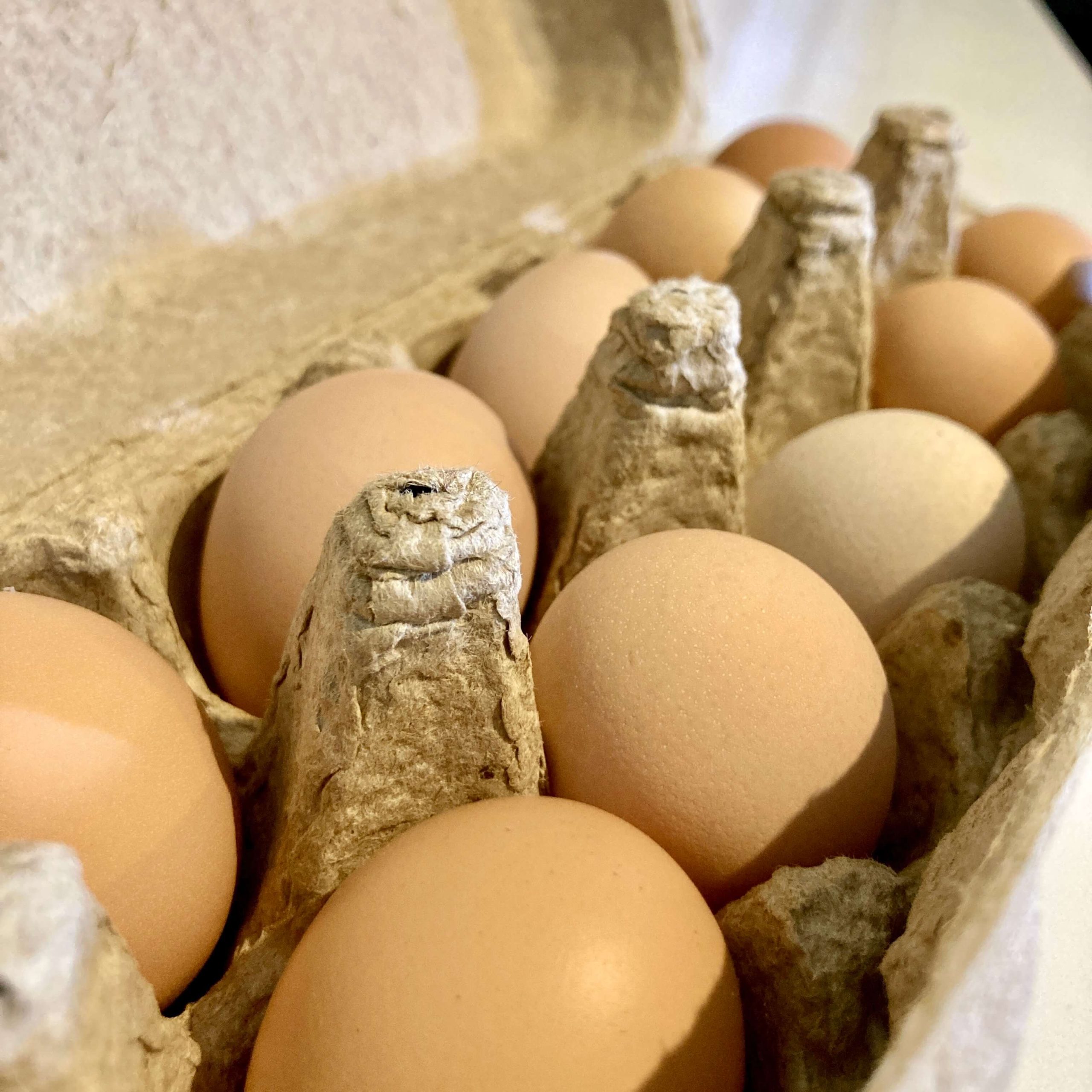
If you’ve ever browsed a local farmers’ market—or traveled in Europe—you may have noticed something surprising: eggs sitting out at room temperature. In the United States, however, unrefrigerated eggs are often considered a food safety “no-no.”
So why the difference? It all comes down to a tiny, invisible layer called the bloom. Here’s what you need to know about washed versus unwashed eggs—and how to store them safely.
1. The Natural Shield: What Is the Bloom?
When a hen lays an egg, she coats it with a natural, waxy layer called the bloom (or cuticle). This coating seals the egg’s 6,000–8,000 microscopic pores.
Its job is simple but vital: keep moisture in and bacteria—like Salmonella—out.
2. Washed Eggs (The Grocery Store Standard)
In the U.S., Canada, and Japan, commercial egg producers are required to wash eggs to remove dirt and droppings.
-
The process: Eggs are cleaned using warm water and specialized soaps.
-
The downside: Washing removes the bloom, leaving the shell’s pores exposed.
-
Storage rule: Washed eggs must be refrigerated. At room temperature, they can “sweat,” creating moisture that allows bacteria to enter the shell.
-
Shelf life: About 2 months in the refrigerator.
3. Unwashed Eggs (The Farm-Fresh Standard)
If you raise your own chickens or buy from a local farm, you’re likely getting unwashed eggs.
-
The advantage: With the bloom intact, the egg is naturally sealed and protected.
-
Storage rule: Unwashed eggs can safely sit on the counter for 2–3 weeks.
-
Shelf life: When refrigerated, they can last 3–4 months.
-
The European approach: Most European countries prohibit washing commercial eggs, believing that preserving the bloom offers better protection against bacteria.
Pro Tips for Handling Eggs
Should you wash farm-fresh eggs?
It’s best not to wash them until you’re ready to use them. If an egg is dirty, try “dry cleaning” it with a cloth or soft brush to remove debris without damaging the bloom.
The Float Test
No matter where your eggs come from, you can check freshness with the float test:
-
Sinks and lays flat: Very fresh
-
Stands upright: Older, but still safe to eat
-
Floats: Discard it
The Bottom Line
If your eggs come from the refrigerated aisle, keep them cold. If they come straight from the coop, it’s perfectly safe to display them in a basket on your counter—just rinse them right before cracking them into the pan.